


Keep your distance. Text us a photo of the nest from a safe spot and we’ll take it from there.
or call 267-603-1811 · Mon–Fri 8am–4pm
A bald-faced hornet nest can start out smaller than a golf ball in spring and grow bigger than a basketball by late summer. You’ll find them in trees and shrubs, under eaves and right on the side of the house. These hornets defend their nest hard, so one near a door, a deck or a play set is a real problem.
Prodigy Pest Solutions is a family-owned company in Morton, PA. We’re led by Matt Kelley, an Associate Certified Entomologist (ACE) with 20 years in pest control, and his wife, Sabrina, and our team brings about 85 years of combined experience to every nest we treat.
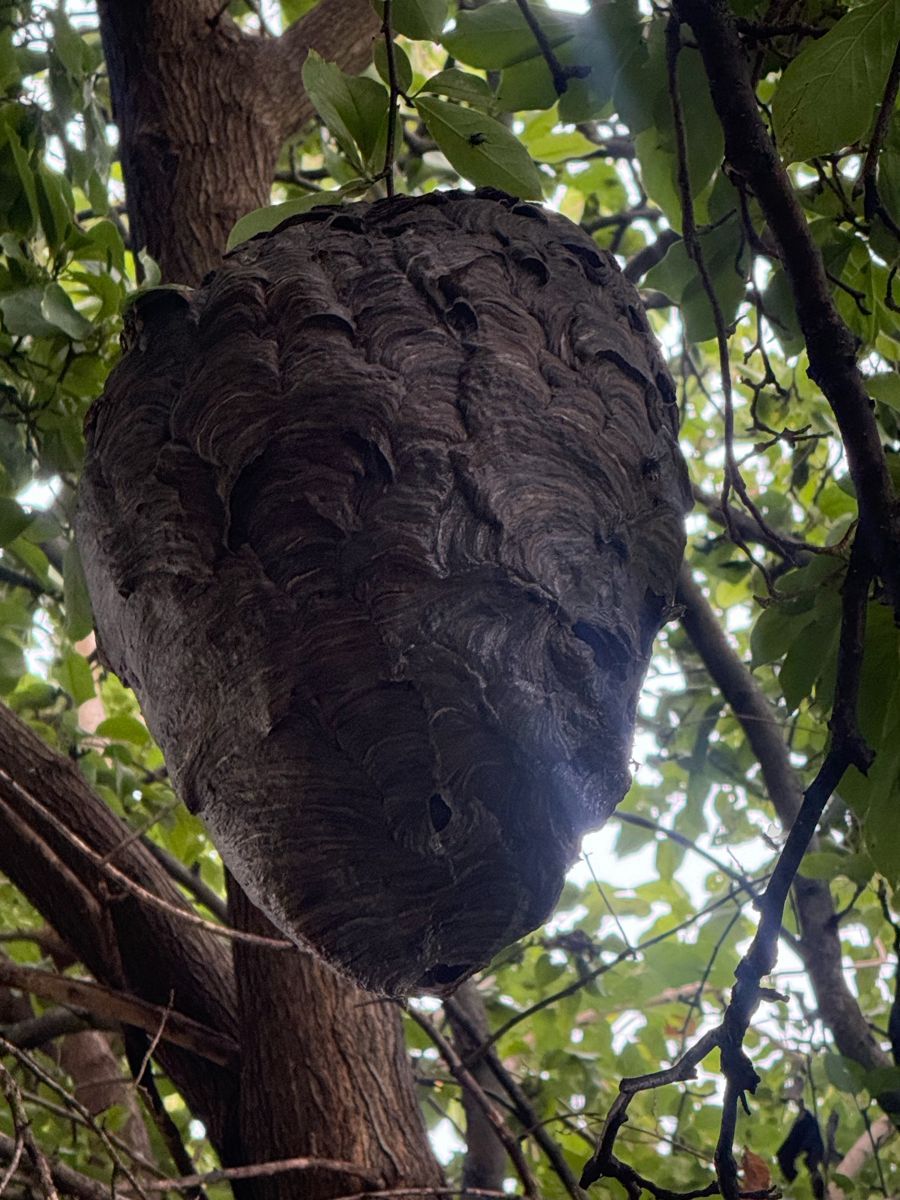
Despite the name, bald-faced hornets aren’t true hornets. They’re a kind of yellowjacket that builds its nest above ground. The “hornet” part comes from their size, and the “bald-faced” part comes from the white markings on their face.
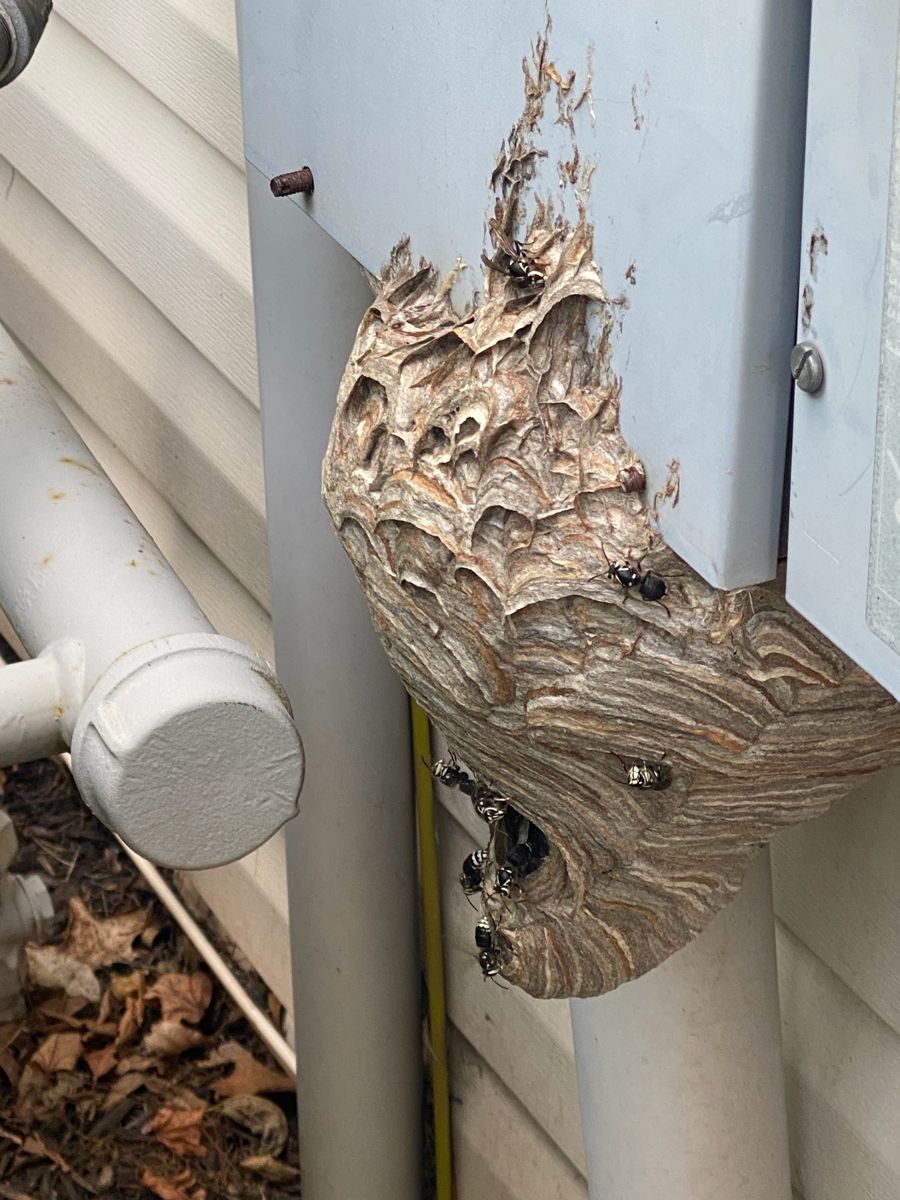
Bald-faced hornets sting to protect their nest, and each one can sting more than once. If a nest gets bumped, sprayed or knocked down, the whole colony can come out at once. Spraying from a distance usually doesn’t reach the hornets inside the paper layers, and it tends to make them more aggressive. Nests up a ladder or near meters, wires and windows add even more risk.
Please don’t plug, burn or hose down a nest, and keep kids and pets away from it. If someone is stung and has trouble breathing, swelling of the face or throat, or dizziness, call 911 right away.
Our technician suits up in protective gear and treats the nest directly, so the treatment reaches the colony inside. Once the hornets are dead, we take the nest down when it can be reached safely. We also look around the property for other nests, since bald-faced hornets, yellowjackets and wasps often show up in the same yards.
We can typically treat nests up to 30 feet high, and we’ve handled jobs much higher than that using ladders and even boom lifts.
Besides bald-faced hornets, we handle yellowjackets (including nests in walls and in the ground), European hornets, wasps, carpenter bees and cicada killers.
A note on honey bees: we don’t treat honey bees. They’re protected pollinators, so if you have a honey bee swarm, a local beekeeper is the right call.
Bald-faced hornet colonies die off after hard frosts in the fall, and they don’t reuse old nests. New queens start fresh nests every spring, so the earlier a nest is handled, the smaller it is.
Our office is at 25 S Morton Ave in Morton, PA, and we serve homes and businesses across Philadelphia, Delaware, Montgomery and Chester Counties. From backyard trees in the suburbs to porches and rooflines in the city, we treat nests all over the area. We’re rated 4.9 stars from 338 Google reviews, and you’ll know us by our branded vehicles.
From a safe distance, text a photo of the nest to 267-603-1811 and tell us where it is. We’ll get back to you with a fast, free quote. You can also call us Monday to Friday, 8am to 4pm.
We can typically treat nests up to 30 feet high. We’ve also handled jobs much higher than that, using ladders and even boom lifts.
No. Bald-faced hornets are a kind of yellowjacket that builds its nest above ground. The European hornet is the true hornet found in Pennsylvania, and we treat those too.
We don’t recommend it. Bald-faced hornets defend their nest and can sting over and over. Knocking down or spraying a nest can send the whole colony after you.
Bald-faced hornets don’t reuse old nests, and colonies die off after hard frosts. New queens build new nests each spring, sometimes in the same yard, so keep an eye out early in the season.
No. Honey bees are protected pollinators, so we don’t treat them. If you have a honey bee swarm, please contact a local beekeeper.
We handle yellowjackets, including nests in walls and in the ground, plus European hornets, wasps, carpenter bees and cicada killers.
Stay back, zoom in and text a picture of the nest to 267-603-1811. We’ll get back to you with a fast, free quote. Prefer to talk? Call us Monday to Friday, 8am to 4pm.
or call 267-603-1811 · 25 S Morton Ave, Morton, PA 19070