


Odorous house ants, carpenter ants, pavement ants and more, handled by a family-owned local team. Text us a photo for a fast, free quote.
or call 267-603-1811 · Mon–Fri 8am–4pm
A few ants on the counter can turn into a steady trail across the kitchen in a matter of days. The ants you see are workers out looking for food, and the colony is hiding somewhere nearby: in a wall, under the floor, beneath a slab or out in the yard. Getting rid of ants for good means finding out which ant you have and dealing with the colony, not just the trail.
Prodigy Pest Solutions is a family-owned company in Morton, PA. Our team is led by Matt Kelley, an Associate Certified Entomologist (ACE) with 20 years in pest control, and his wife, Sabrina. Together, our team has about 85 years of combined experience, so we know how each kind of ant behaves and what it takes to treat it.
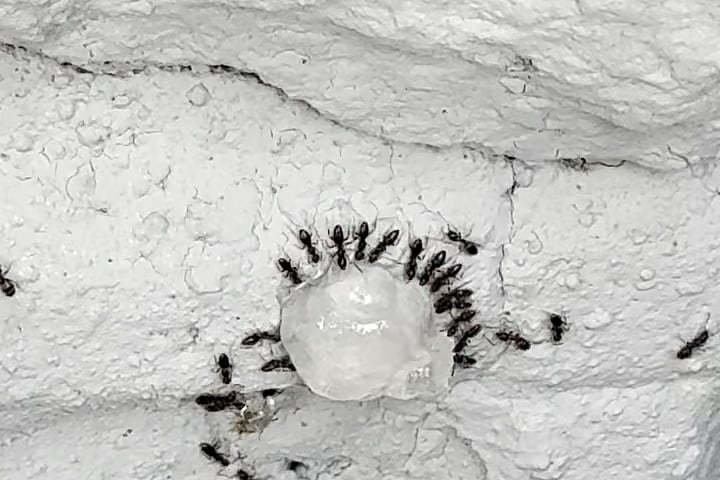
Different ants need different treatments, so the first step is always figuring out which one you have. These are the ants we see most around Philadelphia and the suburbs:
These small brown-to-black ants are the ones you’ll usually find trailing across counters, along baseboards and around sinks. Crush one and you’ll notice a smell like rotten coconut, which is how they got their name. Odorous house ant colonies can have many queens and can split into new colonies when they’re disturbed. That’s why they keep coming back when you spray them, and why they often show up in kitchens after a heavy rain.
Carpenter ants are the big black ants, much larger than the ants you see trailing across a counter. They don’t eat wood. Instead, they chew out tunnels in it to nest, and they strongly prefer wood that’s damp or already damaged by leaks. Signs include piles of coarse, sawdust-like shavings (called frass) below trim, window frames or door frames, big black ants inside at night, and winged ants showing up indoors in late winter or spring. Winged carpenter ants inside the house in spring often mean there’s a nest in the structure.
Pavement ants are small, dark brown to black ants that nest under sidewalks, driveways, patios and slab foundations. Look for small piles of sand or soil along cracks in the pavement or the basement floor. In spring you may see big groups of them on the sidewalk, and they often find their way inside through cracks in the slab.
Not sure what you’re looking at? A clear, close-up photo usually tells us a lot. Text it to 267-603-1811.
Spraying a trail feels like it works, because the ants you can see disappear. But those are only the workers. The colony, and its queens, are still hidden away. With odorous house ants and Pharaoh ants, repellent sprays can make things worse: when the colony is stressed, it can split into several smaller colonies that move to new spots in the house. One trail in the kitchen turns into ants in the bathroom and the bedroom too.
Sprays can also ruin baits. If ants pick up the smell of a spray, they’ll avoid that area, along with any bait placed there. If you’ve already tried something, that’s fine. Just tell us what it was so we can plan around it.
Every ant job starts with an inspection. Your technician identifies the ant, follows the trails back to where they’re getting in and looks for where they’re nesting, inside and out.
We always treat both the inside and the outside of your home. Ants that trail through the kitchen often come from a colony outdoors, and ants nesting outside keep looking for ways in, so treating only one side leaves part of the problem behind. Depending on the ant and what we find, treatment includes:
Carpenter ants take a little more detective work and a multi-pronged approach. We look for frass, trails, damp or damaged wood and the times and places the ants are most active to track down where they’re nesting. Treatment focuses heavily on baits, which workers carry back to the colony, and adds residual applications, foam in wall voids and dusts in the hidden spaces where carpenter ants nest and travel. Carpenter ants go for wood that stays damp, so we’ll also point out leaks, rotted trim, wood touching the soil and branches touching the house. Fixing those helps keep them from moving back in.
We handle ants in homes, rowhomes and multi-unit buildings, plus commercial accounts like restaurants and food facilities. Prodigy is AIB-certified, so we understand what food businesses need for their audits. Seeing roaches too? See our cockroach control page.
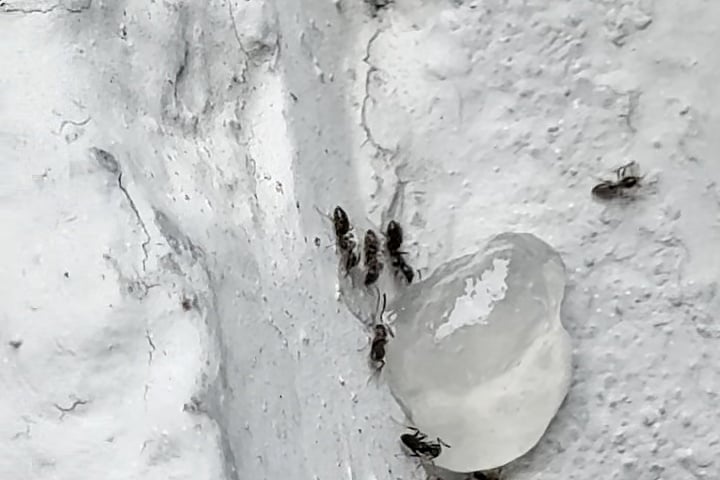
Winged carpenter ants and winged termites both show up in spring, and they’re easy to mix up. Carpenter ants have a pinched, narrow waist, bent antennae and front wings that are longer than the back wings. Termites have a thick waist, straight antennae and wings that are all about the same length. The damage looks different too: carpenter ant tunnels are smooth and clean, while termite tunnels are usually packed with mud and soil.
Either one is worth a call. If you’re not sure which you have, text us a photo of the bugs or the damage. Learn more about our termite control services.
Our office is at 25 S Morton Ave in Morton, PA, and we serve homes and businesses across Philadelphia, Delaware, Montgomery and Chester Counties. That includes city rowhomes, apartment buildings, suburban homes and commercial kitchens. We’re rated 4.9 stars from 338 Google reviews, and you’ll know us by our branded vehicles. Want ongoing coverage? Ants are covered under our Residential Protection Plan.
Text a photo of the ants and where you’re seeing them to 267-603-1811 for a fast, free quote. You can also call us Monday to Friday, 8am to 4pm.
That’s the sign of odorous house ants. When crushed, they give off a smell a lot of people compare to rotten coconut. They’re one of the most common ants in Philadelphia-area kitchens.
Spray only kills the workers you can see, and the colony keeps sending more. With odorous house ants and Pharaoh ants, repellent sprays can also cause the colony to split into new colonies in other parts of the house. Baits and non-repellent treatments work with the ants’ behavior instead, because workers carry the product back to the colony.
Every ant job includes a follow-up service, usually 10 to 14 days after the first treatment. That gives the baits and treatments time to work through the colony before your technician comes back.
We use a multi-pronged approach that focuses heavily on baits, plus residual applications, foam in wall voids and dusts. We also point out damp or damaged wood, leaks and other conditions that attract carpenter ants.
Winged ants inside, especially big black ones in late winter or spring, can mean there’s a nest in the house. Winged termites swarm in spring too. Text us a photo and we’ll help you figure out which you have.
Carpenter ants have a pinched waist, bent antennae and front wings longer than the back wings. Termites have a thick waist, straight antennae and wings that are all about the same length. Carpenter ant tunnels are smooth and clean, while termite tunnels are usually packed with mud and soil.
Yes. We treat ants in homes, rowhomes, multi-unit buildings and commercial accounts like restaurants and food facilities. Prodigy is AIB-certified.
Yes. Ants are covered under our Residential Protection Plan. Ask about it when you text or call us.
Snap a picture of the ants and where you’re seeing them, and text it to 267-603-1811. We’ll get back to you with a fast, free quote. Prefer to talk? Call us Monday to Friday, 8am to 4pm.
or call 267-603-1811 · 25 S Morton Ave, Morton, PA 19070